
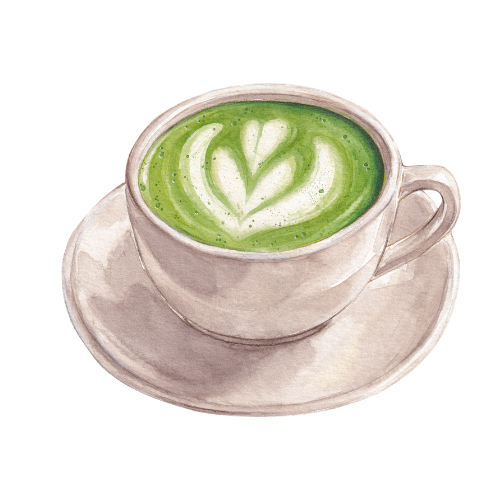
 Where I’m from in California, matcha shops have been my go-to third space—a place to study for finals, meet with friends before class and try fun caffeinated beverages. This summer, I’ve been in D.C. for a communications internship with the Center for Nonprofit Advancement, and I’ve found that in the nation’s capitol, coffee reigns supreme. I didn’t expect that changing my morning drink would change how I thought about the spaces surrounding it. What I’ve realized, though, is that whether it’s a matcha cart or a coffee shop, there’s more to caffeine rituals than what’s in the cup. And in the nonprofit world, the spaces surrounding those rituals can matter more than we might think.
When I took my first sip of matcha in D.C., it was a disappointment—too milky, too thin. But I refused to give up on my quest for the matcha fix I was missing from home. I ventured into a tea and boba shop in Dupont Circle and finally found the ceremonial-grade matcha I had been searching for. It was a vibrant environment, and the shop buzzed with conversation as my friend and I settled in to work on our individual tasks for the day. I had come looking for a familiar drink, but what I found was a familiar ritual: settling in and sharing a space with other people. I started to realize that what I loved about my California matcha shops wasn’t only the matcha. It was what happened around it.
As a remote communications intern, I’ve noticed what happens around these drinks in D.C., too. Cafes haven’t just given me a place to work; they’ve made me find value in building community outside of the traditional workplace. Third spaces are social surroundings separate from your home (first space) and your work/school space (second space). Places like cafes, libraries and community centers are where a lot of informal networking happens. These third spaces offer something an office or Zoom call can’t: an informal, low-stakes environment to exchange ideas, build relationships and spark creativity.
Of course, not every third space is accessible to everyone; cost, noise, physical accessibility, location and expectations around purchasing something make them not accessible to truly everyone. But for a sector that depends on relationships and community, we may be overlooking some of the simplest places where those connections can grow. Whether you are a coffee connoisseur or a matcha newbie, these spaces have something to offer for collaboration. That potential for connection is exactly what makes the concept of a “third space” so relevant to nonprofit work. They’re where conversations become ideas, ideas become collaborations and collaborations can become change.
 Coffee drinkers and matcha fanatics may disagree about what belongs in the cup, but the ritual surrounding it is comparable: finding comfort in a spot and connecting. Nonprofits can tap into these spaces for relationship-building, whether through brainstorming sessions, volunteer recruitment or simply getting to know a potential partner. For example, consider hosting a “Matcha Meetup”, where you invite local nonprofit professionals to try a new matcha spot. Use the practice of trying a new drink as an icebreaker and opportunity to connect with a fellow colleague. Outside the formality of an office or the distance of a Zoom call, these informal settings can take some of the pressure off and make connecting with a potential partner feel more natural.
Ironically, my favorite third space I found this summer doesn’t sell matcha at all. La Cosecha in Union Market became one of my most cherished places to work remotely, with its bustling energy, various food vendors and palpable sense of community. Working there kept me accountable and reminded me of home through its various cultural foods and the way La Cosecha’s most frequented patrons showed up for one another. During the day, I could settle in and get work done; at night, I returned for World Cup watch parties and saw the same space transform into a gathering place. That shift reminded me that third spaces don’t need a single purpose. Their value comes from the different ways people can come together, connect and feel like they’re part of a community. For nonprofits, there’s something to learn from that flexibility: meaningful connections don’t always have to happen in offices or scheduled Zoom calls. Sometimes, changing where we gather can change how we connect. As I return to my familiar and beloved California matcha shops, I’ll be bringing home a new appreciation for what happens around the drink — the conversations and connections that give these spaces their real value.
Ready to find your own third space?
Here are three D.C. matcha spots worth trying:
- Iced Matcha Cloud Latte from Spot of Tea, multiple locations in the DMV area.
- Iced Vanilla Matcha Latte from Little Hat Coffee, located inside Streets Market on 14th Street.
- Banana Bread Matcha or Cereal Matcha from Dolphin Cafe D.C., located just steps from the White House.